

Services
Data

Network connectivity during all phases of launch
- Provide network connectivity, distribution, and monitoring for telemetry, data, voice, and video assets.
- Provide a single point of contact for all spacecraft customer communications requirements.
- Interface with local communications organizations at KSC and CCSFS and offsite transport organizations to meet spacecraft customer support needs.
- Network connectivity and monitoring is provided during all phases of launch vehicle and spacecraft vehicle testing and launch operations.
- Networks are configured between launch pads, processing facilities, other NASA centers, and commercial launch monitoring facilities (both foreign and domestic).
- Utilize the diverse routing platforms, capacities, and apply multiple data formats to ensure redundancy for critical operational support.
- Provides the infrastructure for data archival and retrieval for both real-time and post-operation tests and analysis and for local and remote data access.
- To ensure there is no critical data loss, data is replicated between both East (Hangar AE) and West (Building 836) Coast LSP Facilities.
- Networking services are supported by a capable communications team that verify and validate transport systems.
Video

Transmit and Receive video
- Receive and transmit up to 264 high-definition video signals from spacecraft processing facilities, commercial launch providers, and tracking cameras.
- Each onsite user can have access to video channels of the pads, control rooms, and public affairs associated with their mission through 40 IP video streams.
- Transmit video across the NASA campus through EVCDN or NASAVision, an Enterprise Video Service over open broadcast and secure set top box (STB) support .
- Deployable cameras and Mobile control room (MCR) available to supported east coast launch sites.
- Each customer supported area within our facility have large Displays for video monitoring during launch operations.
- LSP provides PAO with a video booth and live HD feed as well as uplink and downlink of simultaneous (up to 16) video sources for broadcasting and streaming.
Display Customization
- Display up to eight unique, customizable size-and-location video windows on each operations console within the facility.
- Convert SDI video into transmittable IP streaming.
- Receive limited editing, clipping, and effects, create playback in support on SIM.
- Create multi-view displays.
- Each supported area within our facilities have displays to support engineering requirement.
- PPF processing time-lapse and imbedded UTC timecode with video.
Record Video
- Record up to 16 channels of engineering required views for post processing verification simultaneously.
- Record and playback critical mission operations such as: Launch Vehicle roll-out to a Launch Pad, Static Test Fire, and Fuel Tanking for Launch.
- Preset a recorder to document up to 31 hours of your Hazardous operations and closeout events.
- Recorded media can be made available to your mission team upon request via the Mission Comm Engineer (MCE).
- Playback video through our recorders for quick time look post operation local.
Voice

Network connectivity during all phases of launch
- LSP personnel actively monitor system performance during mission operations and can make configuration changes as required.
- Voice Net connectivity and T1 communication to all NASA centers, (NLS-II Contract) launch service contractors, Spacecraft Mission Operation Centers, NASA and commercial payload processing facilities, and the Eastern and Western AF Range.
- Reliable communications during critical ops via a fully redundant voice switch capable of supporting T1’s, Voice over IP, Dial Ins, Dial outs and other features for up to 32 active missions.
- Plain Old Telephone Service (POTS) available at customer supported areas.
- Ninety-six voice nets are recorded simultaneously and provide audio playback for simulations, rehearsals, and customer reviews of operations.
- A custom easy-to-use Voice Application with individually customizable voice net permissions with up to 240 conferences per device.
- Conference types include NETS, Voice Direct Lines (VDLs), Radio Nets, Dial-outs, etc. and can be configured to support Talk/Listen and/or Monitor modes.
- Wireless headsets and split console headsets for shared console utilization and VDL’s for critical personnel.
- 24/7 voice support from voice hardware supplier.
Telemetry

Receive, record, process, and display telemetry data from prelaunch checkout, through launch, spacecraft separation and orbital insertion.
Recording Telemetry:
- Multi-channel recording of PCM data streams.
- Record IRIG timestamped individual frame synced data.
- Recording of telemetry data in IRIG 106 Chapter 10 format.
Processing Telemetry:
- Receive data from multiple sites and assets to include the Range, TDRS Satellite Constellation, and ground stations throughout the world.
Displaying Data:
- Build customized data display pages using IRIS 5.
Flight Ops
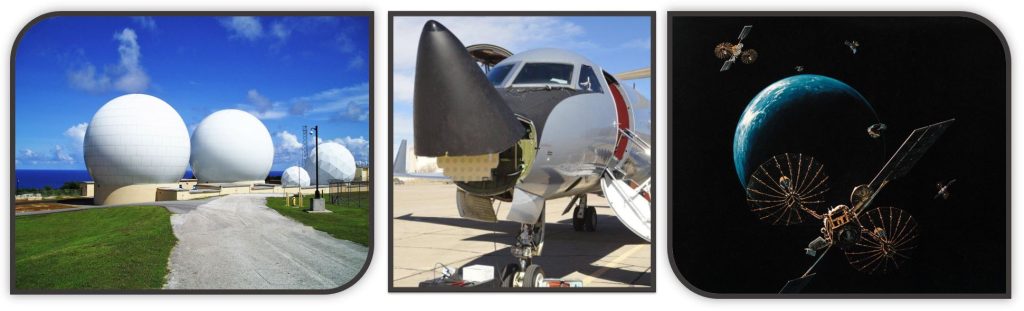
- Provide services to procure and assess launch vehicle and spacecraft down-range data acquisition
- Routinely use land, air, and water deployable tracking services
- Work with other NASA centers, government agencies, and foreign space agencies (ESA, CNES, SANSA) for down range tracking services
Clock
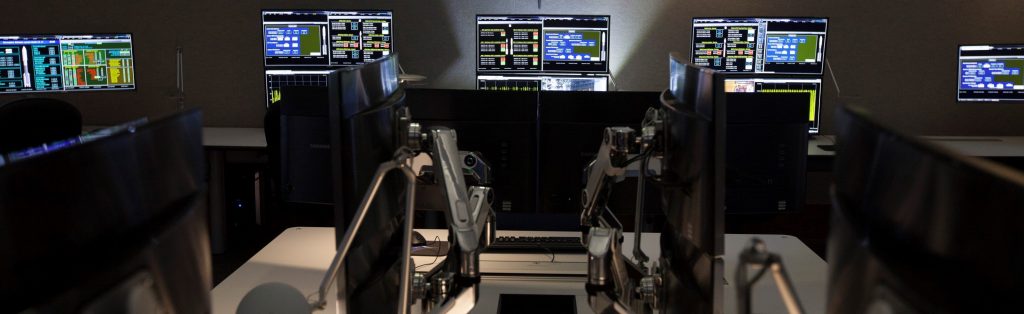
- Connect to the event clock and pages anywhere in the world
- Create custom event lists
- Capture log messages and display them to personnel
- Deploy connected thin clients to remote locations
- Synchronize clocks with the Launch Vehicle providers and Range provided IRIG-B time
- Support joint integration simulations