UPCOMING MISSIONS

COSI
Launch Date: 2027
Launch Site: Cape Canaveral Space Force Station, FL
Launch Vehicle: SpaceX Falcon 9
COSI is a wide-field gamma-ray telescope that will study energetic phenomena in the Milky Way and beyond, including the creation and destruction of matter and antimatter and the final stages of the lives of stars. COSI will help us advance our understanding of the creation and destruction of matter in the Milky Way and beyond. It operates at gamma-ray energies up to millions of times greater than visible light — between 0.2 and 5 million electron volts (MeV) — that uniquely probe astrophysical processes occurring among atomic nuclei, allowing us to directly see where new elements are being formed in our galaxy.
JPSS-4
Launch Date: 2027
Launch Site: Vandenberg Space Force Base, CA
Launch Vehicle: SpaceX Falcon 9
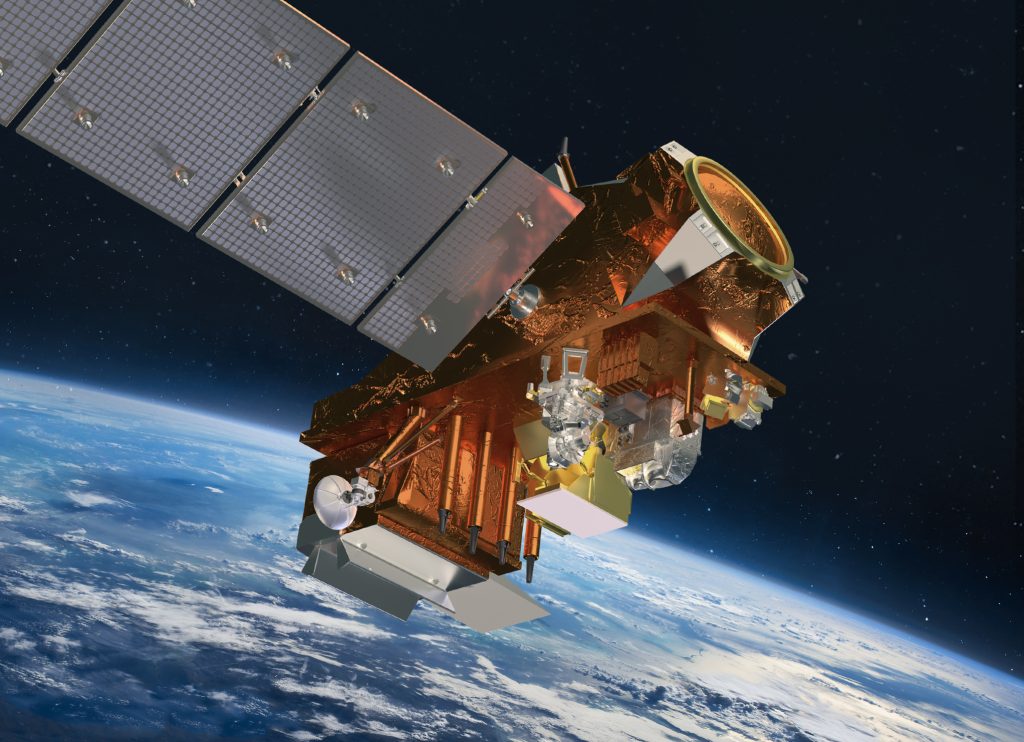
JPSS-4, to be renamed NOAA-22 in orbit, will be the next JPSS satellite to launch, with a launch readiness date of 2027. In addition to the four instruments flying on NOAA-21, JPSS-4 will include Libera, an instrument that will improve our understanding of trends in Earth’s energy imbalance and our changing climate.
JPSS satellites orbit Earth from pole to pole 14 times a day, ensuring full global coverage twice daily. In doing so, they provide the majority of data that informs numerical weather forecasting in the U.S. and deliver critical observations during severe weather events like hurricanes and blizzards.

NEO Surveyor
Launch Date: no earlier than 2027
Launch Site: Cape Canaveral Space Force Station, FL
Launch Vehicle: SpaceX Falcon 9
Near-Earth Object (NEO) Surveyor is the first space telescope specifically designed to detect asteroids and comets that may be potential hazards to Earth.
As it scans the solar system, NEO Surveyor’s sensitive infrared detectors will track the most elusive near-Earth objects. Additionally, NEO Surveyor will be able to find asteroids that approach Earth from the direction of the Sun, as well as ones both leading and trailing our planet’s orbit, where they are typically obscured by the glare of sunlight. All of these are threats that larger ground-based observatories could miss.